

Financial Equity Research
The 2050 Survey
The Data America Needs. The Research the Market Demands. The Foundation for the Economy We Are Building.
The Mission
JBI is gathering the data that will drive the next 25 years of inclusive financial policy and product design.
Through the 2050 Survey, we are magnifying the voices of the nation's fastest-growing populations to identify gaps in credit, housing, small business capital, and retirement planning.


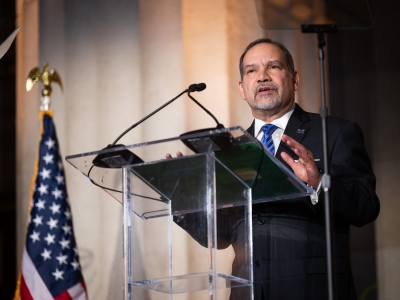
Mitria Spotser
President, Julian Bond Institute
The financial market is one of the most powerful engines of wealth creation in the world — and one of the most powerful engines of wealth exclusion. For generations, communities of color, low-income households, rural populations, and immigrant families have faced structural barriers that prevent them from fully participating in, and benefiting from, the financial system.
These are not accidents of history. They are the compounding results of discriminatory policies, predatory practices, and the persistent failure to design systems that account for the full diversity of the American public.
The Julian Bond Institute exists to confront this reality head-on. We conduct independent research, amplify community voices, and produce actionable policy recommendations aimed at building a financial marketplace that is transparent, accessible, and genuinely equitable. This work matters now more than ever. The decisions being made today — about financial products, consumer protections, regulatory frameworks, and market access — will shape the economic landscape for decades to come. The Institute is committed to ensuring those decisions are informed by the lived experiences of those most affected.
Building an Inclusive Market for a Changing Nation
America is changing. Latino, Black, Asian American, Pacific Islander, and Indigenous communities are among the nation's fastest-growing populations — and they represent not only the cultural future of this country, but its economic future as well. By 2045, the United States is projected to become a majority-minority nation. Yet our financial institutions, investment products, credit systems, and regulatory structures were largely designed for a narrower vision of who an American consumer is.
The cost of this misalignment is staggering — not only in terms of human potential unrealized, but in direct economic terms. When communities are excluded from wealth-building opportunities, when credit is withheld or priced punitively, when financial products are designed without cultural competency or linguistic accessibility, the entire economy suffers. Closing racial and ethnic wealth gaps could add trillions of dollars to the U.S. economy. Inclusion is not charity — it is sound policy and smart economics.
The Julian Bond Institute is dedicated to making the case — with data, with stories, and with policy proposals — that a truly inclusive financial market is both achievable and necessary. We work with financial institutions, regulators, legislators, and community organizations to identify barriers, expose disparities, and co-create solutions that work for the communities they are meant to serve.

Sara Weiss
Executive Director, Julian Bond Institute
Since launching the Julian Bond Institute, CRL’s first new research entity in our nearly 25-year history, we’ve been meeting with industry leaders and policy makers, and listening to community members and advocates interested in improving the state of lending for under-represented communities.
As we continue Bond’s powerful legacy of advocacy and education, we’re excited to soon share upcoming research that will explore/provide actionable insights on how financial products and policies impact the wallets of consumers, including:
- The dangers of unvetted financial advice on social media.
- How younger and minority consumers use and are affected by debt and credit.
- Attitudes of young borrowers around financial investments and assets, from the traditional like stocks and housing, to digital and crypto financial products.
- Impact of regulatory inaction on the financial security of working people.
Research products will be designed and produced to include the lived narratives of working people, especially those who are marginalized or exploited. With these communities and other stakeholder organizations in mind, JBI will disseminate our findings in a variety of formats, including reports, graphics, social media, newsletters, and in-person or virtual convenings.
We appreciate your support in creating an economy that is inclusive and promotes financial fairness for everyone.
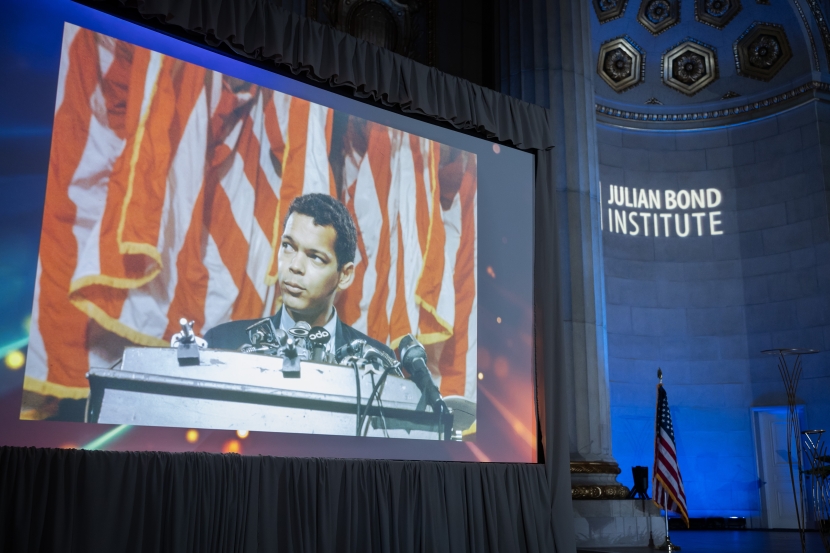
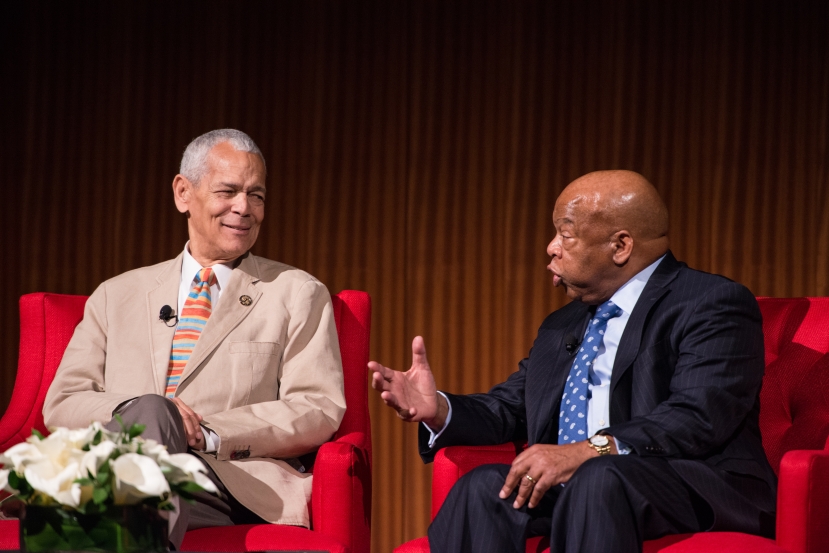
Julian Bond
Tracing a pathway through Julian Bond’s legacy of advocacy and education, JBI brings together Bond’s love of grassroots advocacy from his days as a founding student organizer with The Student Nonviolent Coordinating Committee, to his later work as the first president of the Southern Poverty Law Center, a chairman of the NAACP, a decades-long state legislator in Georgia, and founding board member of CRL until his death in 2015. Throughout Bond’s life, he drove policies cementing crucial consumer and civil rights for all.
About JBI
JBI’s mission is to conduct research that elevates the financial needs, challenges, and opportunities presented by our increasingly diverse nation to effectively design a financial market for the future.

Photo by Tolbert & Bing Studios, All Rights Reserved
Our Approach
JBI focuses on community narratives and perspectives to better engage academia, policy makers, and financial institutions in researching and developing financial products and policies that meet consumers’ evolving needs while leading to increased financial security and wealth for all.
Embodying Julian Bond’s commitment to economic justice for everyone, JBI places communities who will make up a majority of the future financial marketplace in the driver’s seat — creating a platform for research and collaboration that reflects the lived experiences and needs of consumers across the country.
To accomplish this, the Institute will:
Become a vital, trusted source for actionable, evidence-based research and policy solutions that policymakers, the financial industry, community and civil rights advocates can quickly access, easily understand, and effectively use to advance financial equity.
Mobilize Institute partners to accelerate support for practices and policies that allow racially marginalized communities to enjoy financial security and economic mobility.
Cultivate and elevate a diverse community of researchers and experts to inform policymakers, business leaders, and community organizations on how to create policies that allow families and communities to build financial resilience and wealth.
Advisory Council
One core component of the Institute is a new research advisory council to support research design, development, and prioritization. It is composed of academics, community members, and representatives from financial institutions to drive community-informed research to develop the financial market of the future that serves all.
- View Council Members
- Fenaba R. Addo, University of North Carolina-Chapel Hill
- Ibijoke Akinbowale, District Native Partners
- Andrei Bartra, Capital One
- Chheng Sim Bun, National CAPACD
- Terri Friedline, University of Michigan
- Makada Henry-Nickie, JPMorganChase Institute
- Shannan Herbert, Washington Area Community Investment Fund
- Haydar Kurban, Howard University
- Anne Leland, Exodus Lending
- Carlos Monje Jr., JPMorganChase Policy Center
- Vanessa Perry, George Washington University
- Roberto Quercia, University of North Carolina-Chapel Hill
- Jessica Santos, Leah Zallman Center for Immigrant Health Research
- Elba Serrano, East LA Community Corporation
- David Silberman, Senior Fellow, Center for Responsible Lending
- Frederick “Fred” Wherry, Princeton University

Fellowship Program
The new research fellowship program supports external faculty researchers to either conduct independent research aligned with the Julian Bond Institute's priorities or deepen collaboration and capacity building opportunities for the research, outreach, and policy affiliates of the Institute.
- View Fellowship Members
- Luisa Blanco, Pepperdine University
- Martin Mende, Arizona State University
- Maura Scott, Arizona State University
- Angelino Viceisza, Spelman College

“The humanity of all Americans is diminished when any group is denied rights granted to others.”
- Julian Bond























Pillars of Financial Equity
By focusing on closing the racial wealth gap and empowering underserved communities through engagement in the design and development of collaborative research projects, JBI is able to build community-informed policy solutions and innovations that achieve financial equity.
The Institute conducts research in six areas key to financial security and wealth building:

Managing Everyday Expenses
Managing Everyday Expenses
We examine affordable small-dollar credit as a tool to address income volatility and rising necessary costs, focusing on specific challenges such as high fees, repeat borrowing cycles and product stacking while exploring opportunities to enhance competition in small-dollar markets, particularly for borrowers of color disproportionately impacted by the racial wealth gap.

Paying for Higher Education
Paying for Higher Education
As the impact of student debt burdens continues to delay many consumer’s ability to access wealth building assets, our research explores how policy changes could mitigate the impact of student debt burdens while being mindful of ensuring acceptable levels of credit risk.

Housing Affordability and Ownership
Housing Affordability and Ownership
Seeking to explore ways to responsively increase homeownership in communities of color, JBI works to expand housing affordability, including decreasing rental cost burdens and leveraging solutions within already-funded government programs that may attract private capital investments.

Expanding Small Business Capital and Credit
Expanding Small Business Capital and Credit
Examining the financial needs and realities of small business owners, especially in historically underserved communities, JBI uses our unique access to alternative qualitative evidence — including surveys, interviews and diaries — to better equip and create a financial ecosystem where small business owners are set up for success.

Ensuring an Inclusive Clean Energy Transition
Ensuring an Inclusive Clean Energy Transition
Exploring opportunities in clean energy transition efforts for improved homeownership and minority-owned businesses, JBI identifies opportunities to ensure communities of color gain equitable access to federal and local grants and tax incentives supporting the transition to sustainable green energy.

Using Technology Responsibly to Expand Financial Inclusion
Using Technology Responsibly to Expand Financial Inclusion
Investigating machine learning and other technological advancements on financial systems, this research concentration seeks to ensure data and algorithmic innovations are properly developed and applied to expand financial inclusion and access to credit.
JBI Action Center
Want to sign up to receive JBI updates? Have a question for one of our researchers? Do you want to share a story about your experience as a consumer or borrower? We want to hear from you! Connect with us through our JBI Action Center to get involved.
Support the Institute
Generous support from people like you helps the Julian Bond Institute build an inclusive and equitable financial marketplace of the future.
JBI is a 501(c)3 nonprofit, EIN 74-3043913.
All donations are tax deductible to the extent allowed by law.